Can AI Mix Your Church? Ron Cochran on FOH vs Broadcast Reality

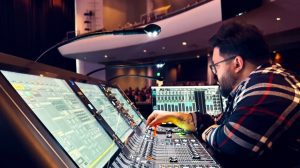
On the latest Church Solutions Podcast we interview a past guest who brings decades of real time experience in mixing church audio. Ron Cochran does not disappoint.
Hosts: Phil Thompson, Steve Lacy, with guest audio veteran Ron Cochran (worshipfacility.com contributor, FOH/broadcast mixer, trainer, and former touring drummer).
Episode: Church Solutions Podcast #496
Theme: What AI can (and can’t) do for church audio—today.
Quick Summary
AI can already generate convincing music, but live mixing—front-of-house and broadcast—still needs a human. According to Ron, the bottlenecks are real-time decision-making, latency, and the messy, beautiful variability of live players and rooms. Smart tools help, especially in post-production, yet Sunday-morning mixes live or die on fundamentals: translation, frequency management, gain structure, and team craft.
“Front-of-house and broadcast mixers can mark themselves safe from the AI apocalypse—for now.” —Ron Cochran
Who is Ron Cochran?
- 20+ years in church production (FOH & broadcast)
- Trained dozens of teams; mixed hundreds of services
- Regular writer for Worship Facility on audio, culture, and production
- Former pro drummer/engineer; toured/recorded widely (yes, that Jacob’s Trouble era)
AI & Mixing: Where It Actually Helps (and Where It Doesn’t)
What AI does well (today)
- Creates finished pieces from prompts (derivative “3D print” of music ideas)
- Assists in the studio/post where it can “look ahead” on a recording (noise, de-breath, timing fixes, gentle auto-leveling)
What AI does poorly (today)
- Real-time live mixing (FOH & live stream)
- Needs micro-decisions per instrument/vocal every second
- Heavy processing adds latency; quickly desyncs audio & video
- Live players are never identical take-to-take; AI can’t anticipate feel and dynamics
Bottom line: AI won’t run your FOH or live broadcast mix this year. Use adaptive/studio-grade plugins to polish recordings—not to run live.
Broadcast Mixing That Translates (Especially to Phones)
Most online viewers listen on smartphones (Ron cites 80% from community surveys). That changes your priorities.
Translation Tips
- Prioritize vocals. Clarity beats everything.
- Manage low end. Fundamentals won’t carry on tiny speakers; add tasteful upper harmonics for bass/kick so they read on phones.
- Reference devices. Use headphone correction/“virtual room” tools to audition iPhone/earbuds/car and adjust accordingly.
- Mix for many, not one. Aim for a balanced mix that survives phone speakers, earbuds and desktops.
Rule of thumb: “Mix big, not loud.” Big = full and spacious without harshness.
FOH Foundations that Make Streaming Easier
- Control the stage. Enclose/iso drums when the room demands it—even large rooms do this to keep cymbal wash from polluting the house & stream.
- Gain structure first. Clean headroom lets compressors/EQs work musically.
- Frequency management > faders. Harshness (2–5 kHz build-up, brittle cymbals, pokey guitars) reads as “too loud” even when meters say it’s not.
- SPL guidance. Warm, non-fatiguing worship often lives around 88–92 dB(A), slow. Past 98–100 dB expect complaints unless the tonal balance is excellent.
- If it’s on stage, it should be in the mix. Choirs/strings shouldn’t just be “seen”—they should be heard.
Practical “Next Sunday” Checklist
- Decide your majors: Vocal intelligibility, band balance, and congregational singability.
- Shape lows for translation: Add upper-harmonic support for bass/kick; tame sub-boom.
- Tame harshness early: Notch piercing cymbals/guitars; gentle multiband on bus if needed.
- Reference like your audience: Check on a phone, then on decent earbuds, then on small speakers.
- Align FOH & broadcast: If you run a separate broadcast bus, start from FOH, then tailor EQ/comp for devices (don’t just copy the house).
- Control the room: Iso drums or shields in lively spaces; keep stage volume reasonable.
- Document & iterate: Save scenes/snapshots; note what translated best for your stream.
A Word on Expectations
Stop comparing your mix to megachurch streams recorded in treated rooms with dedicated engineers and post sweetening. Your goal is a clear, musical, and worshipful mix for your people, your room, and your devices.
Favorite Moments & Nuggets
- Latency is the real villain. Even the best AI tools add delay that breaks live sync.
- Earplug bowl ≠ win. Often a sign of harshness, not just volume.
- Mix for the majority device. Phones dominate; make choices that still feel full there.
- Vocals, vocals, vocals. If people can’t sing along or understand the pastor, nothing else matters.
Keep Learning with Ron
Ron writes frequently at WorshipFacility.com on church audio, production culture, and team dynamics. Search for his articles to dive deeper into FOH/broadcast craft.
Listen to This Episode
🎧 Church Solutions Podcast — Episode 496
Available wherever you listen:
- Spotify
- Apple Podcasts
- Official Podcast page on StreamingChurch.tv
Need Help With Your Church’s Stream?
StreamingChurch.tv helps churches improve audio translation, viewer experience, and analytics—along with full streaming solutions. If you’d like a quick audit of your stream’s audio chain, we’re happy to help.
Thanks for listening and reading! If you haven’t subscribed to the Church Solutions Podcast yet… what are you waiting for?