From Attendance to Belonging: Because Warm Bodies in Rows Isn’t the Goal


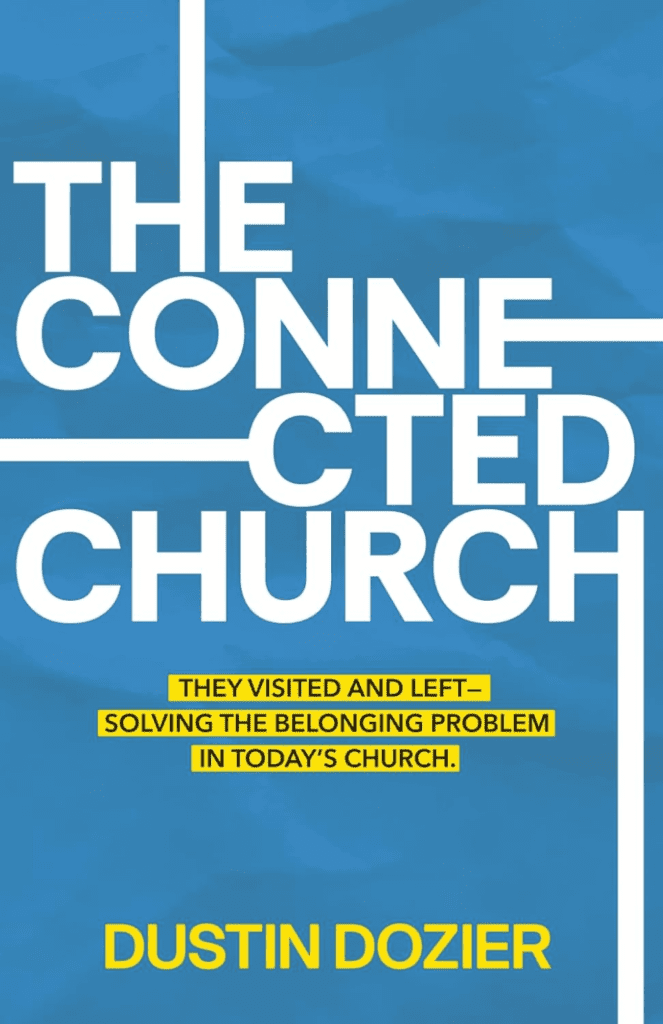
On Episode 510 of the Church Solutions Podcast, Phil Thompson and Steve Lacy interviewed Dustin Dozier, author of the bestseller, The Connected Church. Dustin says if churches want people to move from simply attending to actually belonging, they need more than a good Sunday service. They need clear next steps, intentional follow-up, relational pathways, and a ministry culture built around helping people connect, serve, and grow. A packed room is not the same thing as a connected church. Never has been. Never will be.
Why This Matters More Than Ever
A lot of churches are discovering the same frustrating reality: people may still come, but they are not necessarily connecting.
That is the real issue.
You can have solid preaching, strong worship, friendly volunteers, and a livestream that does not look like it was powered by a potato, and still have people walk in, sit down, nod politely, and vanish into the parking lot before the final chord fades.
That is not just a modern annoyance. It is a discipleship problem.
In this episode of the Church Solutions Podcast, Phil Thompson and Steve Lacy talk with teaching pastor and author Dustin Dozier about what churches are really up against when it comes to belonging, next steps, and building a connected church. The conversation is refreshingly practical and cuts through a lot of the usual church jargon fog.
What Is the Real Problem Churches Are Facing?
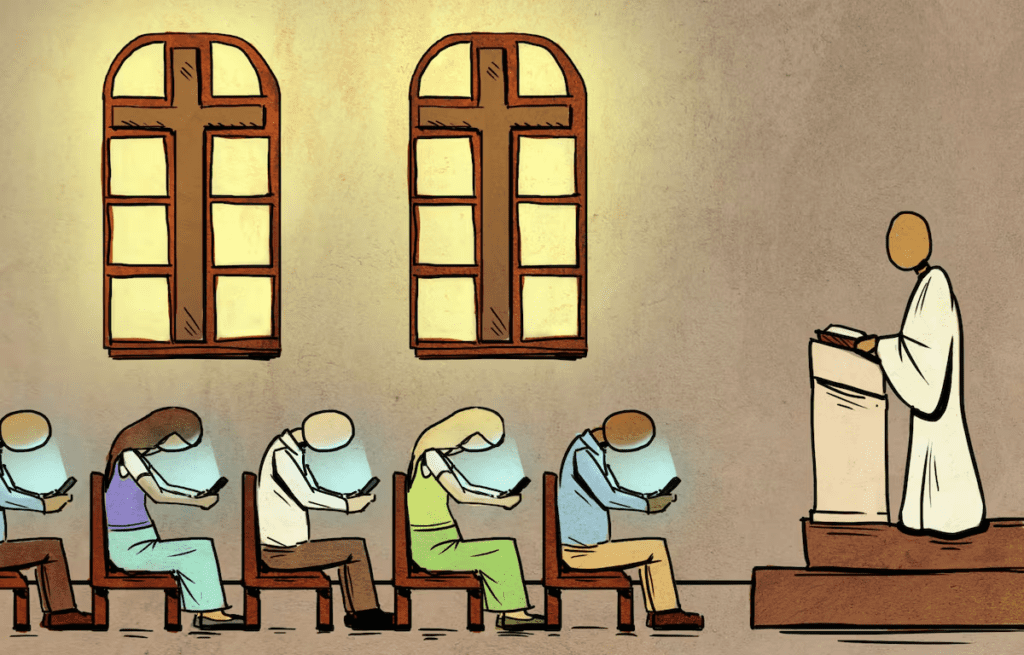
According to Dustin, the issue is not simply attendance. It is disengagement.
People are busy. Culture is noisy. Families are pulled in seventeen directions before lunch. Church is no longer the default center of community life the way it once was. That means many people attend less often, connect less deeply, and stay on the fringes longer.
And honestly, some of them prefer it that way.
They want the back row.
They want minimal eye contact.
They want the spiritual equivalent of curbside pickup.
But churches are not called to create polished religious drive-throughs. The mission is not just gathering a crowd. The mission is making disciples.
A Great Church Service and a Connected Church Are Not the Same Thing
This was one of the strongest ideas in the whole conversation.
A great church service can be well-planned, distraction-free, biblically grounded, and engaging. That matters. Churches should absolutely care about that.
But a connected church goes further.
A connected church helps people feel known, wanted, and invited into something deeper than attending an event once a week. It creates pathways into serving, groups, relationships, care, and spiritual growth. It says, “We care about more than whether you showed up. We care whether you are actually becoming part of the body.”
That difference is massive.
A great service says, “Thanks for coming.”
A connected church says, “We’re glad you’re here. Let’s take the next step together.”
Why So Many Churches Struggle With Belonging
A lot of churches put nearly all their energy into Sunday morning. That is understandable. Sunday is visible. Sunday is urgent. Sunday shows up every week whether you are ready or not.
But when all the focus goes into the service itself, the church can accidentally create a system where people attend without ever truly engaging.
You can get people in the door with good music, strong teaching, helpful programs, or a clean website.
You do not keep them with those things alone.
People stay where they feel seen.
People grow where they feel needed.
People belong where someone intentionally helps them move forward.
That does not happen by accident. It does not happen because you slapped “Welcome Home” on a banner and hoped for the best.
The Church’s Job Is to Create Clear Next Steps
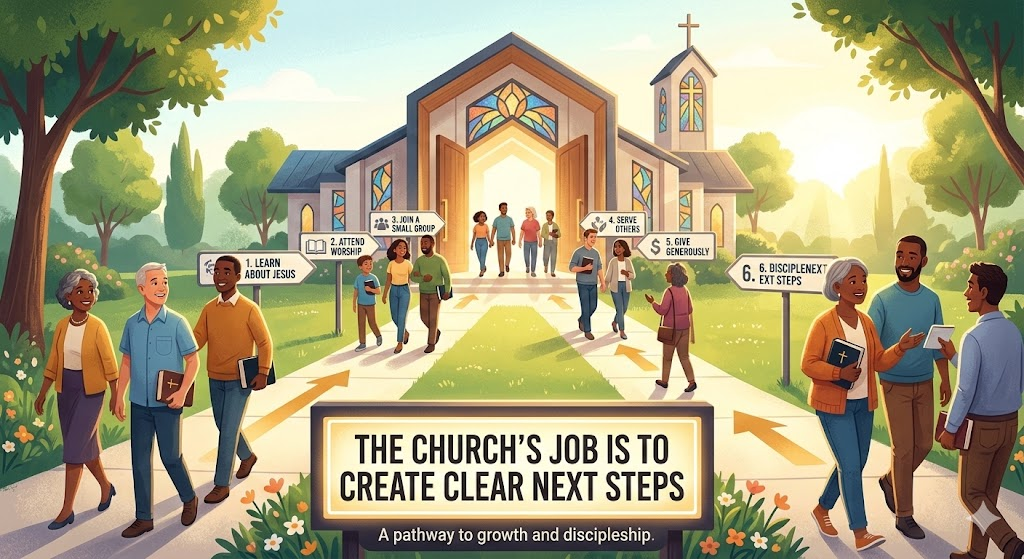
One of Dustin’s most practical points was this: churches cannot force people to take next steps, but they can make those next steps clear.
That sounds obvious until you visit churches where the next step is roughly as clear as a tax form written in ancient Greek.
If people do not know what to do next, many of them will do what humans do best when confused: absolutely nothing.
Clear next steps might include:
- a newcomers event
- a small group
- a serving opportunity
- a parenting workshop
- a ministry interest conversation
- a simple personal invitation to meet someone after service
The key is that the next step should move people forward without scaring them off.
Because no, the first next step for most people should not feel like:
“Great to have you here. Next Sunday you’ll be baptized, leading a small group, and running the parking team.”
That is not a pathway. That is an ambush.
The Best Next Steps Reduce Anxiety
This is where churches can win in a big way.
Many people come into church carrying skepticism, hurt, awkwardness, confusion, or plain old nerves. They do not know the language. They do not know the people. They do not know whether this is a place where they can bring their actual life instead of their polished church face.
So churches have to think intentionally about how to reduce anxiety.
That means:
- using clear language
- avoiding insider jargon
- personally inviting people
- explaining what an event is actually for
- making it easy to attend without feeling trapped
- designing next steps that feel relational, not institutional
A personal invitation matters more than churches often realize. “Come with me” feels very different from “Here’s a program, good luck.”
Churches Need Balance, Not a Pendulum Swing
Phil raised a smart point in the episode about how ministry emphasis has shifted over the years.
At one point, the focus was often on attracting people and growing attendance. Then the pendulum swung, and some leaders reacted by saying they were not interested in growth at all, only discipleship and connection.
Dustin’s answer was wise and grounded: it should not be either-or.
Churches need to engage the non-believer and equip the believer.
That balance matters.
You need environments that are approachable for the person who has never been to church or who carries deep church hurt.
You also need pathways for actual growth, maturity, service, and discipleship for the people who are ready for more.
If a church only focuses on attraction, it may grow shallow.
If a church only focuses inward, it may become spiritually cozy and practically closed.
Healthy churches create room for both welcome and formation.
Your Website and Livestream Still Matter
This part matters for churches in 2026, because nobody is showing up blind anymore.
Before visiting your church, people are checking the website, looking at social media, watching sermons, scanning children’s ministry info, and deciding whether your church feels alive, clear, and trustworthy.
Dustin described the website as curb appeal, and that is exactly right.
If your website looks stale, confusing, outdated, or like it was last refreshed during the dial-up era, it creates friction before a guest ever steps foot on campus.
The same goes for streaming.
Streaming is not the enemy of connection. Used well, it is part of the front porch. It helps people explore before they engage. It helps regular attenders stay connected when they are away. It extends the reach of teaching and creates more opportunities for follow-up and ministry throughout the week.
Technology does not replace relationships.
It supports them.
That is the sweet spot.
What Small Churches and Big Churches Need to Remember
Phil also asked an important question: is it easier for smaller churches to become connected churches?
In some ways, yes. Smaller churches often have a natural relational advantage. People know each other. It is harder to stay anonymous. Belonging can happen more organically.
But big churches are not doomed to become spiritual airports where people wander around unrecognized.
Dustin’s answer was simple and strong: whether your church is 100 people or 10,000, the core ingredients are the same.
People and intentionality.
That is it.
Not trendiness.
Not complexity.
Not program overload.
If you care for people well and create intentional pathways for them to connect, serve, and grow, you can build a culture of belonging at any size.
How to Know If Your Church Has a Belonging Problem
Here is the uncomfortable but useful diagnostic question:
Are people moving from attending to engaging?
If attendance exists but group involvement is low, serving is low, return rates are low, or follow-up is weak, something is off.
You may have a good event.
You may not have a connected church.
Some key things to measure include:
- how many attenders join groups
- how many serve regularly
- how many first-time guests return
- how quickly follow-up happens
- whether people can access real relationships without unnecessary red tape
If it takes six months, four classes, three forms, and a scavenger hunt to join a small group, that is not a process. That is ministry bureaucracy wearing a church lanyard.
Leadership Sets the Tone
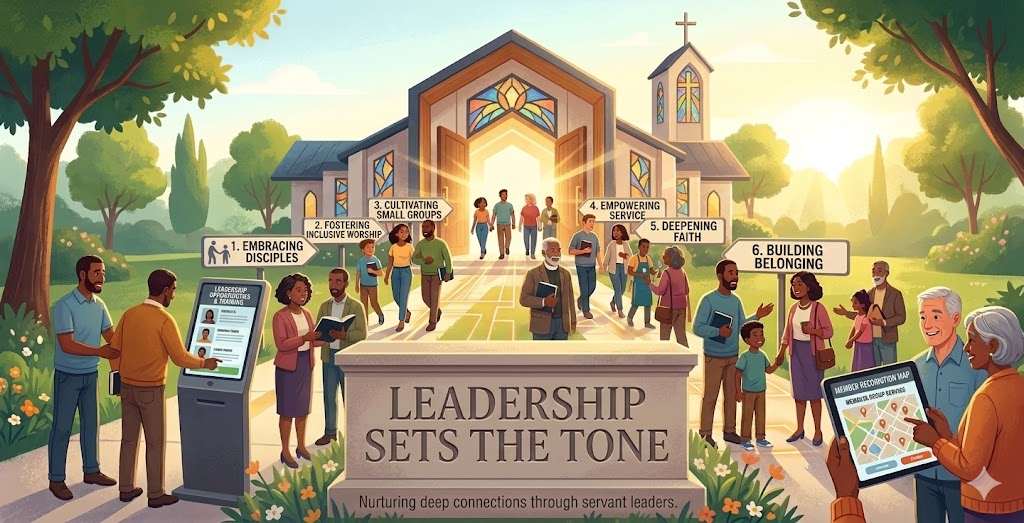
This kind of culture has to come from the top.
Dustin made the point that church leaders can get buried in meetings, systems, and planning cycles, but belonging starts with a genuine heart for people. If leaders spend all their time managing church and no time actually being with people, the culture eventually reflects that.
Churches that do belonging well tend to have leaders who:
- care deeply about people’s stories
- remove unnecessary barriers
- prioritize real conversations
- build systems that serve people instead of trapping them
- keep reminding the church that discipleship is personal
The goal is not just efficiency.
The goal is people.
That sounds obvious, but churches forget it all the time while polishing the machinery.
Practical Takeaways for Churches That Want More Connection
If your church wants to move people from attendance to belonging, start here:
1. Clarify your next steps
Make it obvious what a person should do after attending. Do not make them guess.
2. Reduce intimidation
Use clear language, personal invitations, and approachable environments.
3. Measure connection, not just attendance
Track groups, serving, return visits, and follow-up.
4. Strengthen the front porch
Your website, social presence, and livestream should help people feel informed and welcomed before they arrive.
5. Build for different people, not one narrow profile
Think about first-time guests, longtime believers, young families, young adults, and older adults. Belonging is not one-size-fits-all.
6. Remove red tape
If people want to connect, do not make them run a ministry obstacle course.
7. Lead relationally
A connected church is built by leaders who are with people, not just around plans.
Final Thought
Churches do not exist to collect attendees like baseball cards.
The goal is not just to fill seats, count heads, or create a polished weekly event people consume and leave behind. The goal is to help people connect, grow, serve, and stay.
A great service matters.
Good systems matter.
Strong communication matters.
Streaming matters.
But belonging happens when a church becomes intentional about helping real people take real next steps into real community.
That is the kind of church people do not just visit.
That is the kind of church people call home.
Next Steps: Watch or Listen to the Full Conversation and Get The Connected Church
This episode of the Church Solutions Podcast is packed with practical insights for pastors and church leaders who want to move beyond attendance and build a church where people actually belong.
Watch or Listen here: https://podcast.streamingchurch.tv