Pros and Cons of AI and Ministry


In our latest episode of the Church Solutions Podcast(Episode 517), hosts Phil Thompson and Steve Lacy dive into a topic that has shifted from science fiction to a Monday-morning reality: Artificial Intelligence in the Church.
As we settle into 2026, the data is clear—AI isn’t just coming; it’s already here. But as with any powerful tool, it brings a complex set of “Pros” and “Cons” that every ministry leader needs to weigh.
The “State of AI” in 2026: By the Numbers
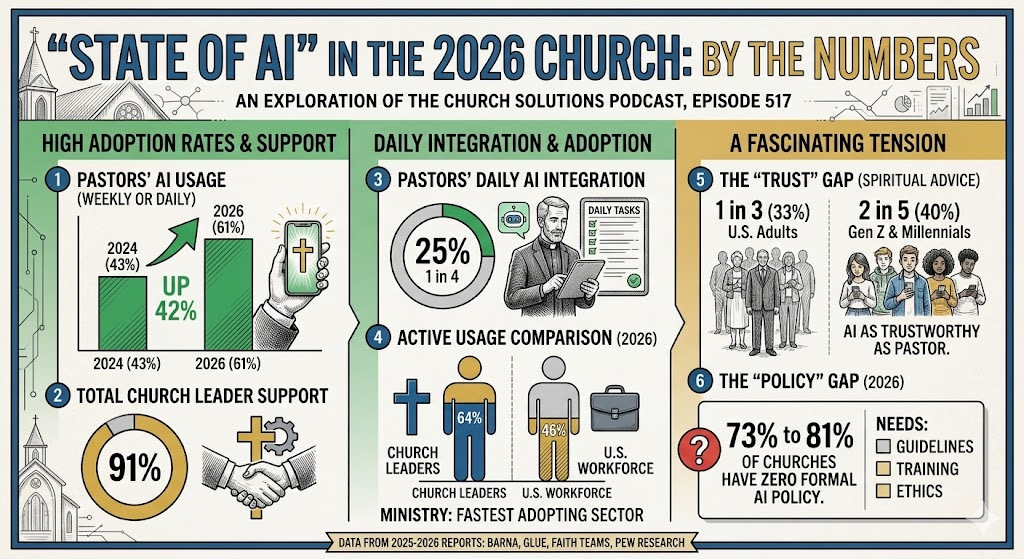
Recent statistics from organizations like Barna, Pew Research, and Gloo highlight a massive shift in how church leaders view technology:
- Adoption is Skyrocketing: 61% of pastors now use AI weekly or daily (up from 43% just two years ago).
- A Leading Sector: Interestingly, church leaders are adopting AI faster than the general U.S. workforce (64% vs 46%).
- The Trust Gap: 1 in 3 adults (and 40% of Gen Z/Millennials) now say they trust spiritual advice from an AI as much as from a pastor.
The Pros: Efficiency for the Sake of Ministry
The primary argument for AI in the church is stewardship. By automating the “business” of church, leaders can spend more time on the “people” of church.
1. Sermon Research & Assistance
Tools like Pulpit AI or Logos help pastors synthesize commentaries and find historical context in seconds. As Phil noted, this isn’t about letting a machine write your message; it’s about having a “digital intern” to handle the grunt work of research so you can focus on the heart of the message.
2. Breaking Language Barriers
AI-powered platforms now provide live, multilingual translation during services. This allows multi-ethnic congregations to experience worship together, ensuring that language is no longer a barrier to the Gospel.
3. Content Repurposing (The Multiplier Effect)
One of the most practical uses is taking a 40-minute Sunday sermon and instantly transforming it into:
- Social media clips
- Blog summaries
- Small group discussion guides
- Devotionals
Steve Lacy shared how he uses the Multiplier tool at StreamingChurch.tv to create rich discussion guides for his small group, making the Sunday message live on throughout the week.
The Cons: The Risk of “Form Without Power”
While the benefits are practical, the pitfalls are deeply theological and relational.
1. The Loss of Human Presence
AI can draft a prayer or a condolence note, but it cannot “weep with those who weep.” Steve shared a personal story about resisting the urge to use AI for an anniversary note to his wife, opting instead for “awkward, unpolished English” written by hand. In ministry, authenticity often trumps eloquence.
2. The Shortcut Temptation
There is a fine line between using AI for research and using it to bypass the “spiritual wrestle” with Scripture. A sermon generated entirely by an algorithm lacks the authority that comes from a pastor’s personal prayer and lived experience.
3. Lack of Oversight
Surprisingly, 73% to 81% of churches have zero formal AI policy. Without guidelines, staff members are left to navigate the ethics of data privacy and “Algorethics” on their own.
The Tool vs. The Teammate
As we navigate this landscape, it’s helpful to categorize where AI belongs:
| Category | Use AI For… | Avoid AI For… |
| Administration | Volunteer scheduling & email drafts | Final leadership decisions |
| Sermon Prep | Fact-checking & summaries | The “heart” and personal application |
| Creative | Graphics & video captions | Personal prayer & devotional time |
| Care | Organizing prayer requests | Delicate pastoral counseling |
Steve and Phil’s Final Thoughts

The most successful churches in 2026 will be those that use AI to clear the “busy work” from their calendars so they can double down on what machines can never do: laying on of hands, sharing a meal, and building an authentic, Spirit-led community.
The Golden Rule for Church AI: Use it to manage the system, but use your heart to shepherd the soul.
We can help you with questions about AI. Reach out today by going to StreamingChurch.tv